Shafeen Alam
Making compliance data something an enterprise can actually defend
Hybrid organizations enforce policy, validate compliance, and protect safety standards using workplace data they can't fully vouch for. I led two connected initiatives at Envoy: attendance correction governance, and the global accessibility infrastructure behind multi-language safety assessments.
An edited record that nobody can explain does not hold up when someone asks.
60-second read
Compliance records could be edited directly, which corrected the number and destroyed the provenance.
Replace direct editing with a governed request chain, and treat language as infrastructure rather than translation.
Led both initiatives: attendance correction governance, and multi-language safety assessment authoring.
Audit traceability 45% to 96%. Approval turnaround down 41%.
01 · Shipped
Two production systems that made workplace data auditable: a governed correction path for attendance, and language infrastructure that let a safety assessment mean the same thing in every language a site operates in.
02 · The problem
Attendance data drove real consequences (policy enforcement, compliance reporting, occupancy decisions), and it was wrong often enough to matter. Badge readers miss. People forget to check in. Someone is at an offsite, or goes home sick. The only remedy was an admin editing a record directly, which fixed the number and destroyed the provenance.
Meanwhile the same enterprises ran mandatory safety assessments across sites where English wasn't the working language. A translated quiz that silently falls back to English isn't a translation problem. It's a compliance record asserting someone understood something they never read.
The shared failure
Both systems produced records an auditor would accept and a designer shouldn't. The data looked clean precisely because the interface hid how it got that way.
03 · Initiative one Correction governance
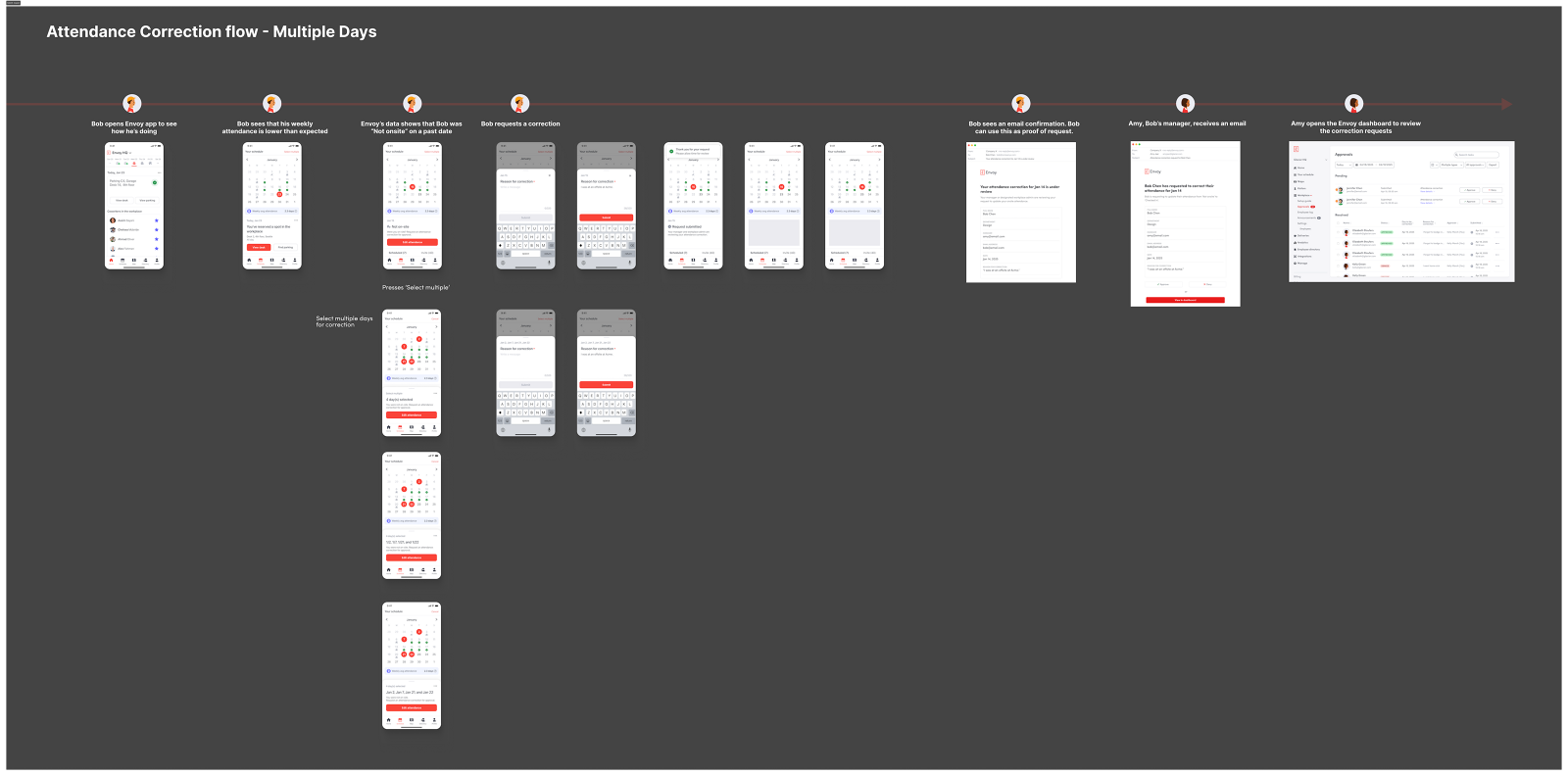
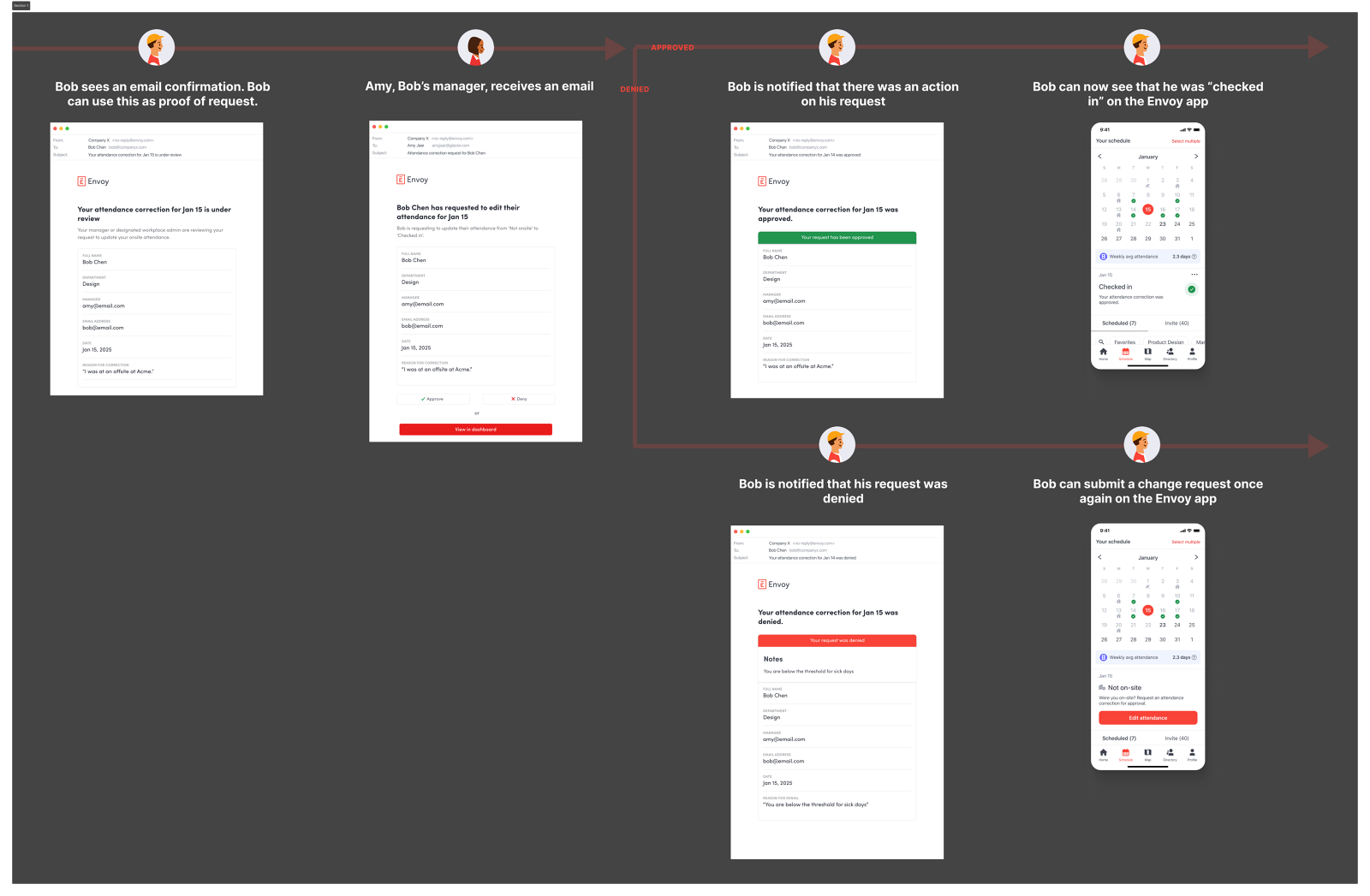
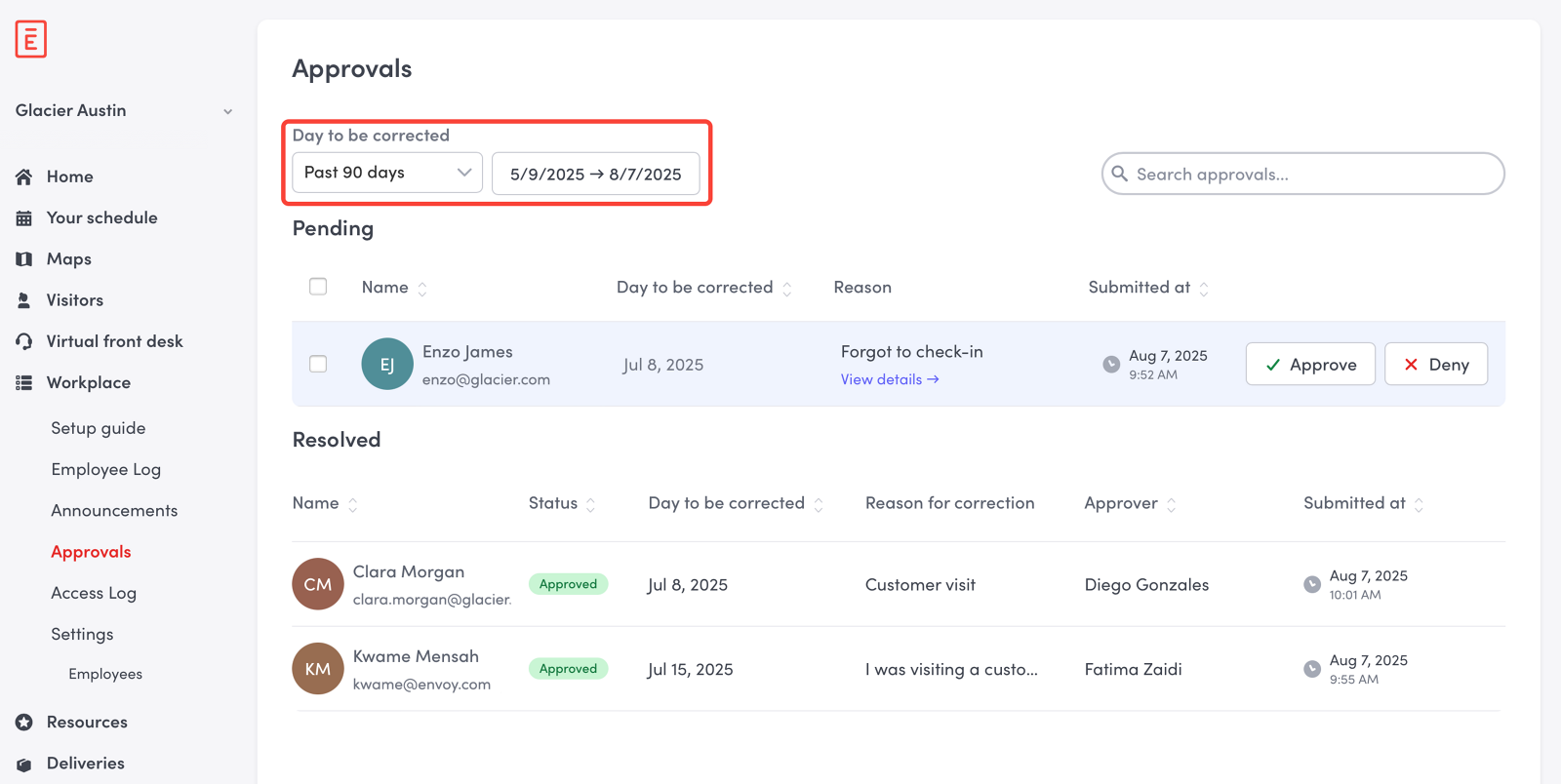
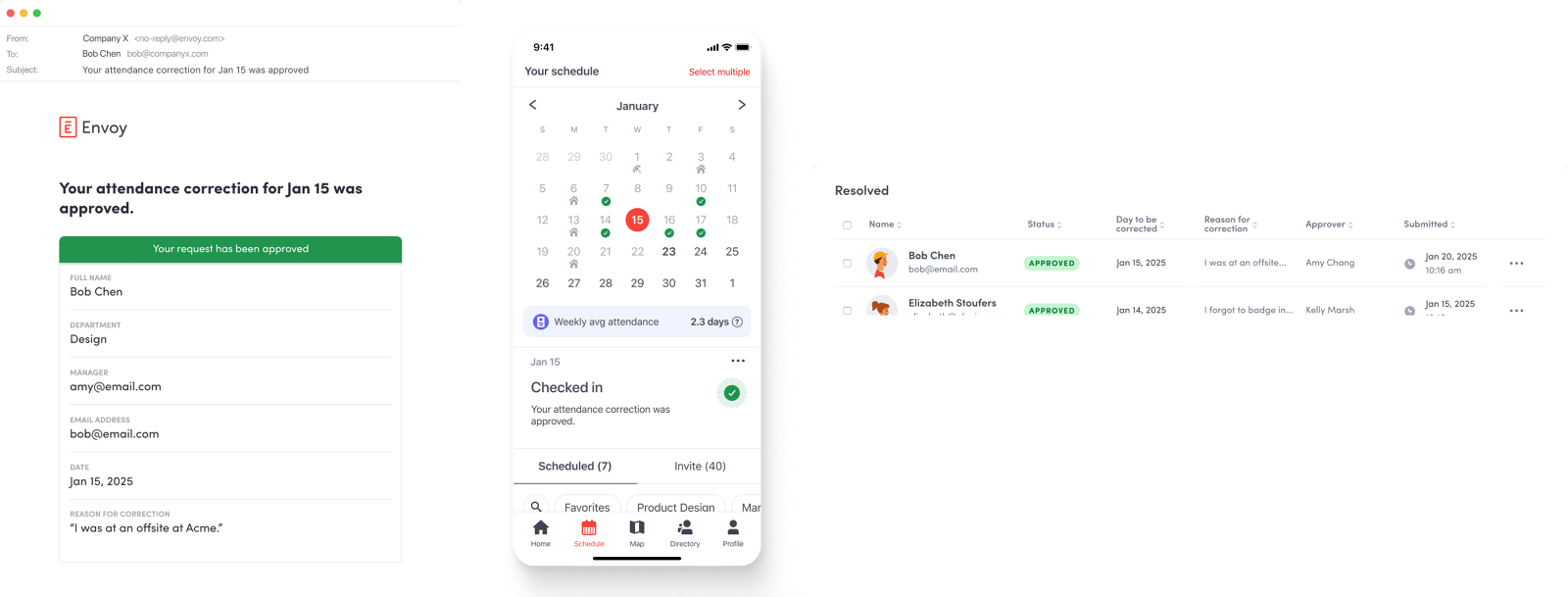
I replaced direct editing with a request chain. An employee can't change the record; they can ask for it to be changed, with a reason, and a manager decides. The correction and its justification become the same object.
04 · What I cut
Auto-approval for “obvious” corrections. It would have quietly reintroduced the original problem: a record no human vouched for.
The point of the chain isn't friction; it's that an approver's name sits on every change. Automating the easy cases removes exactly the thing that makes the record defensible.
05 · Initiative two Language as infrastructure
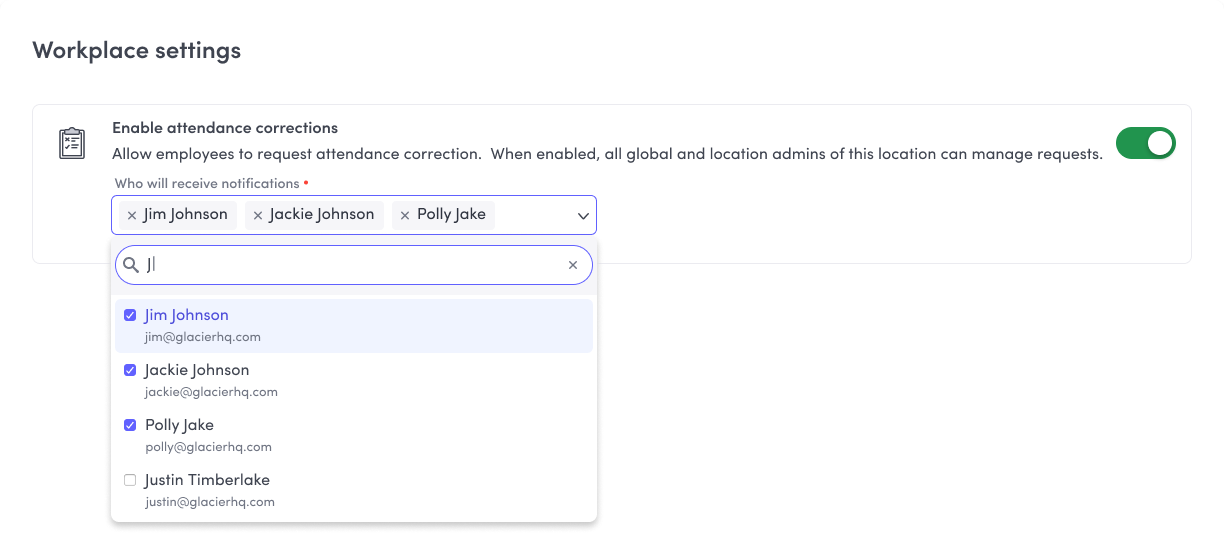
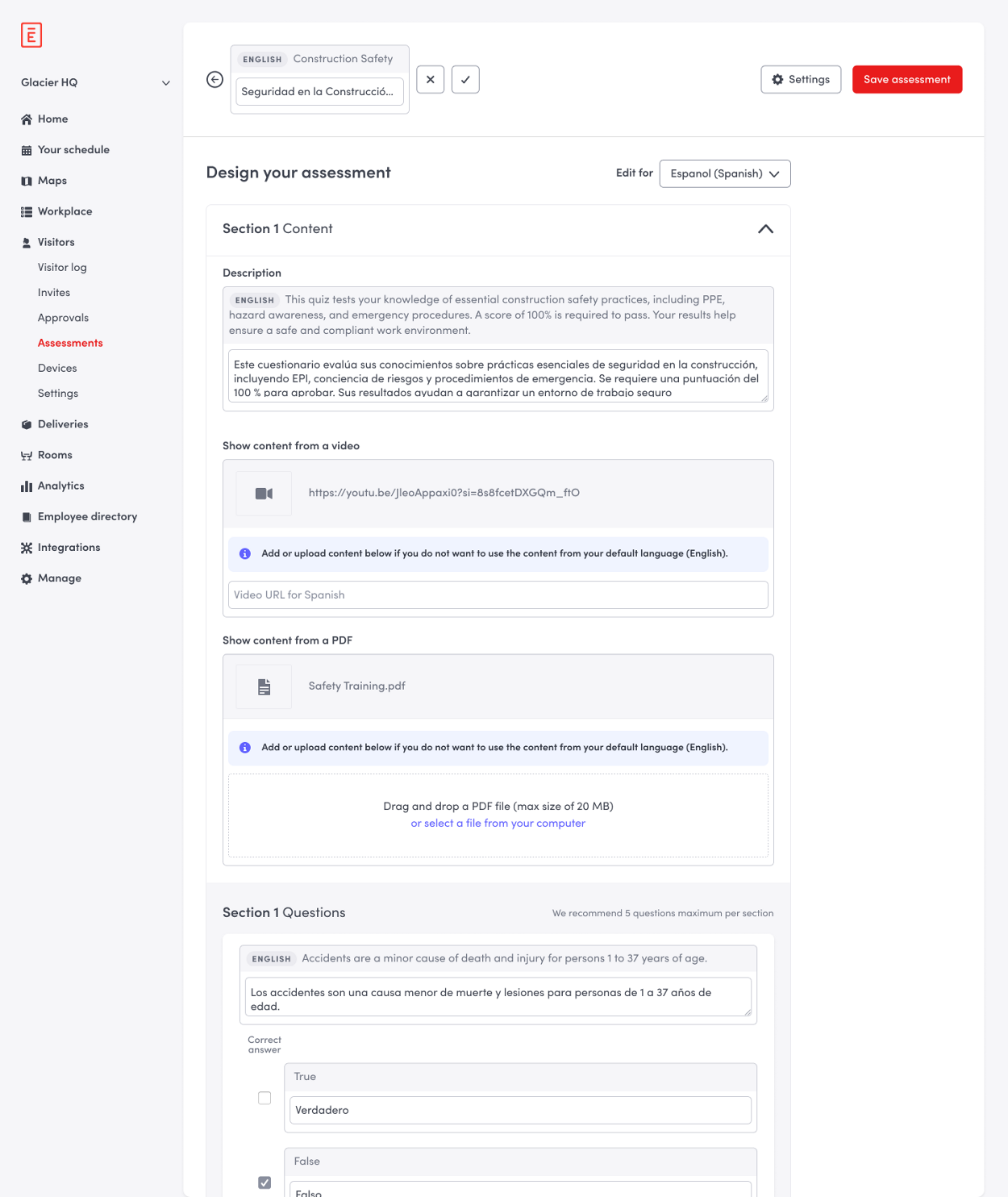
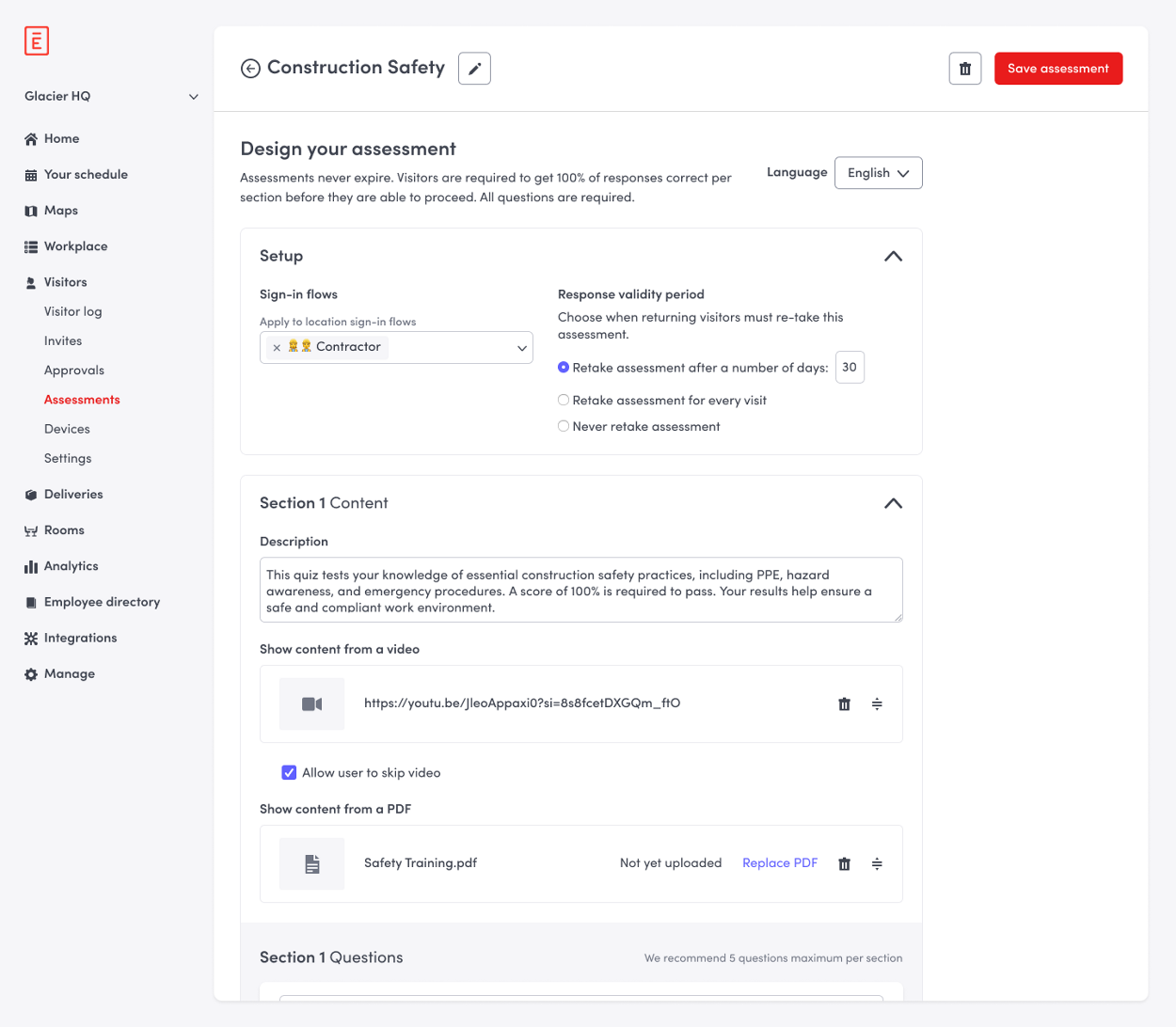
Safety assessments had to be authored once and be true in every language a site operates in. The design problem wasn't a translation UI. It was keeping the default-language source visible while an admin writes the translation, so nothing gets orphaned and no gap goes unnoticed.
06 · The states nobody demos
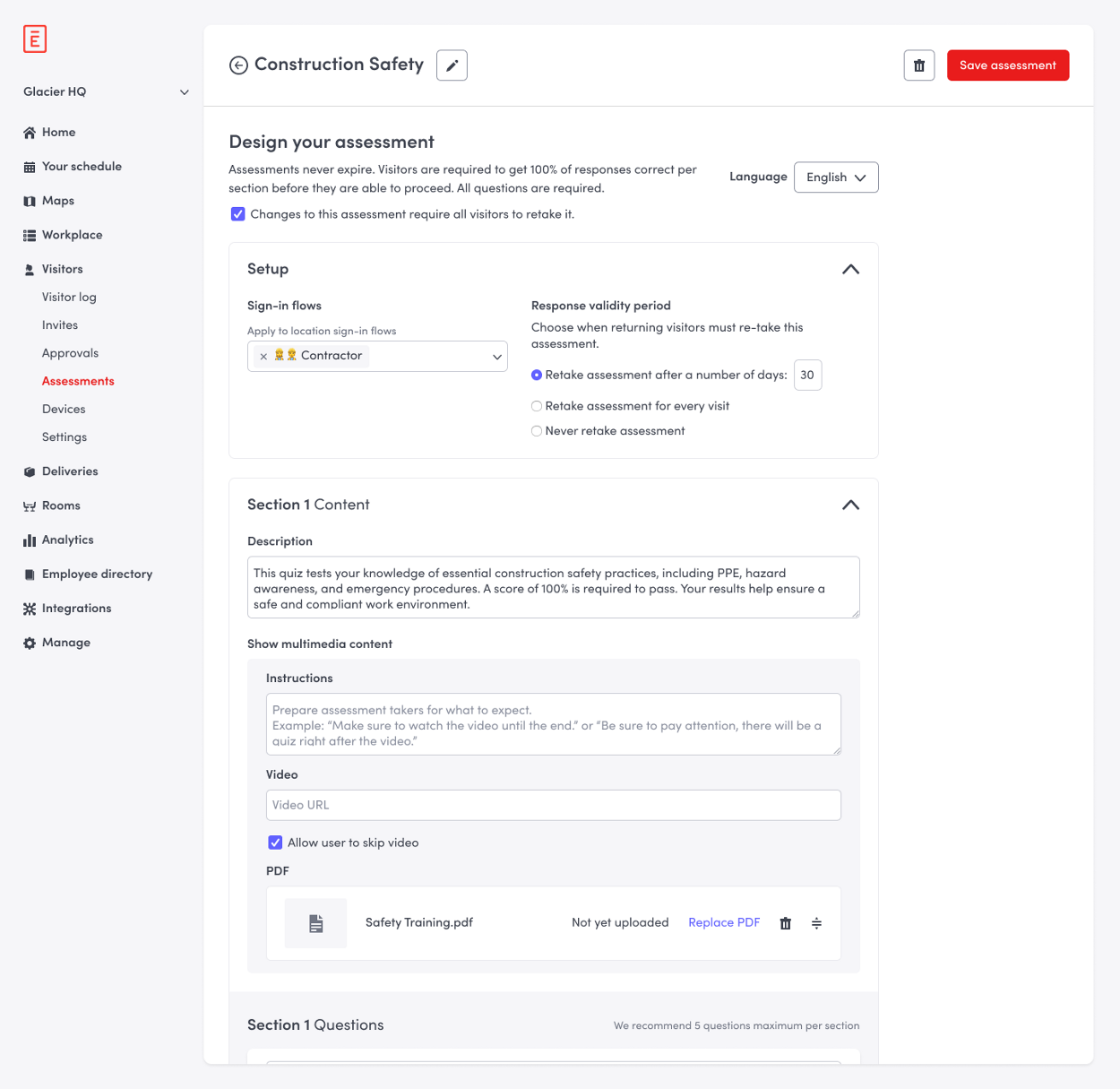
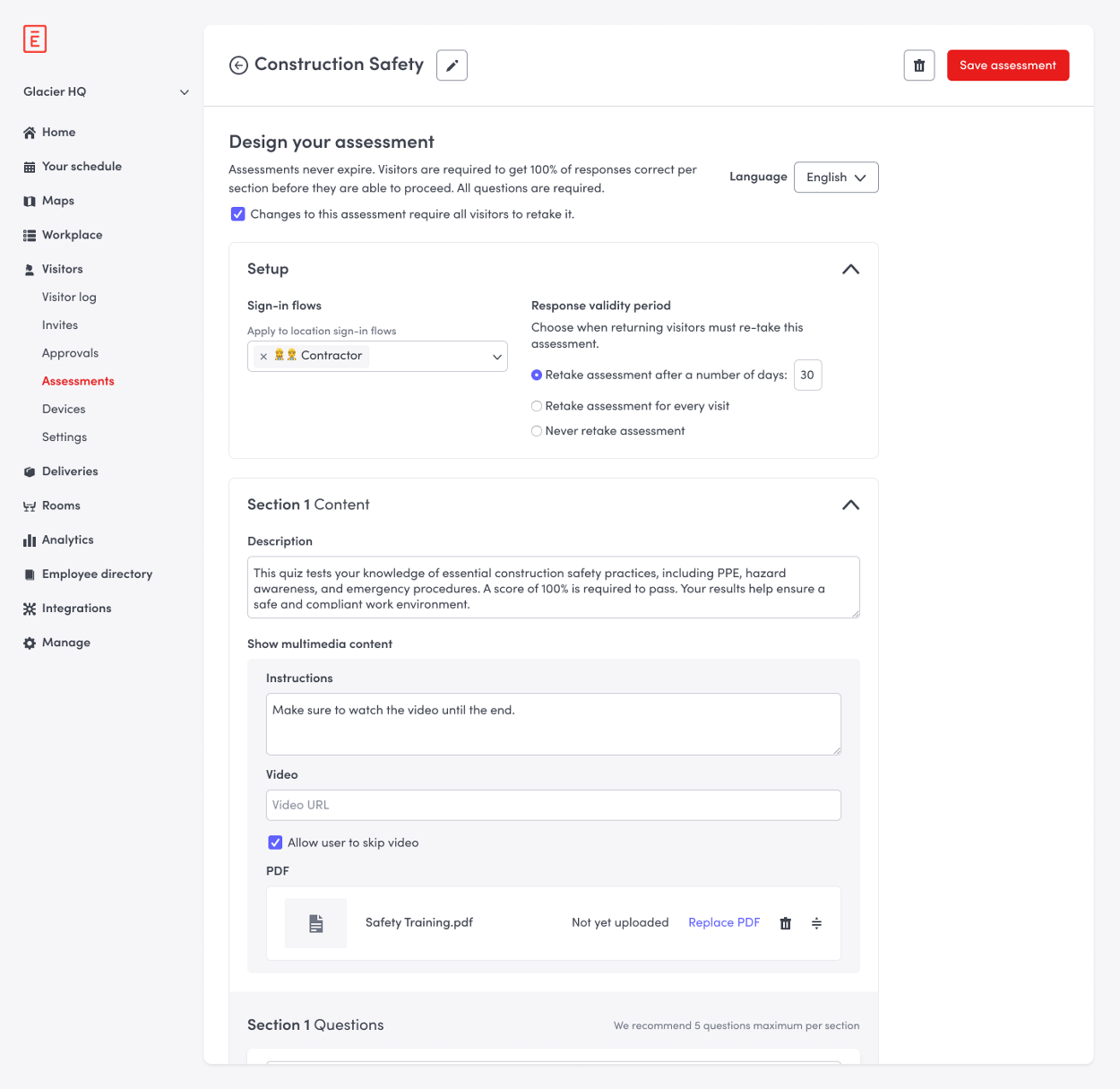
Most of the work in authoring infrastructure is the in-between: a field not yet written, media not yet attached, an admin who doesn't know what this field is for. Each is a legitimate configuration, and each needed a designed answer instead of an empty container.
07 · Policy at the authoring layer
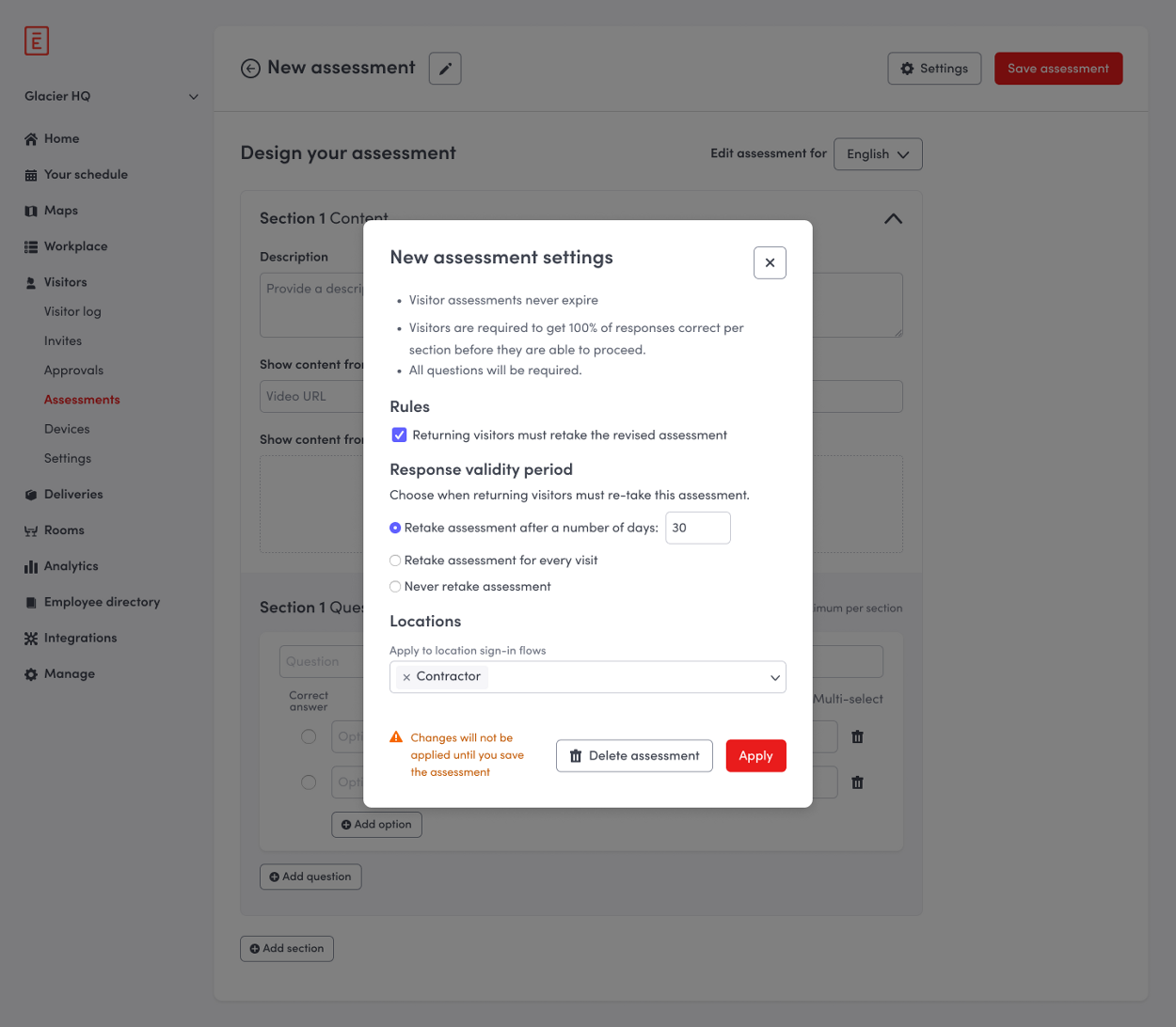
Retake rules, validity windows, pass thresholds, and which sign-in flows an assessment governs. The compliance policy itself lives in these controls. So I moved them out of a modal and into the authoring surface.
What the visitor gets
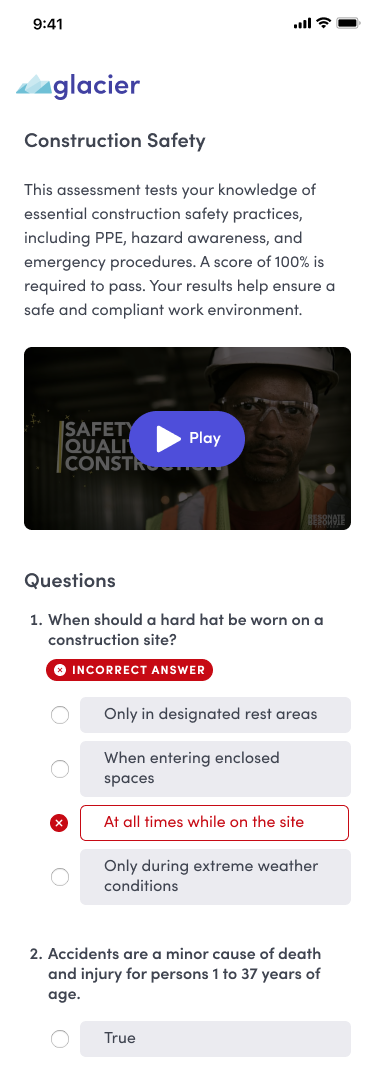
The end of a long chain of admin decisions: the contractor's own language, the video their admin attached, and a 100% pass requirement.
A wrong answer is marked plainly, in place, and named as incorrect. In a safety assessment the point isn't to score someone. It's to make sure they leave knowing the right answer, so the record means what it claims.
08 · What connects them
Both initiatives replaced a clean-looking record with an honest one. A correction now carries who approved it and why; an assessment now carries which language a person actually read. Compliance integrity is a provenance problem, and provenance is decided in the interface.
09 · Impact
Measured after rollout across a global, multi-tenant footprint.
The number I'd defend in an interview is traceability: 45% to 96% structured logging. The rest follows from it. You can't reconcile, audit, or trust what was never recorded as a decision.
10 · Takeaways
A record you can't explain isn't compliance. It's paperwork.