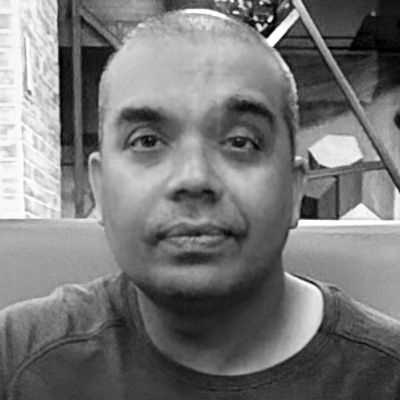
Shafeen Alam
Design for decisions that carry consequences.
Hands-on product designer who takes complex problems and makes them clear, for consumer and business products alike. I own the work end to end, from research to shipped UI. I've also led teams of up to 12 when the role called for it.
Hi, I'm Shafeen 👋🏽. I turn ambiguous, high-stakes workflows into AI-assisted, data-rich products people can understand and act on.
The domain changes.
The systems thinking does not.
Problems I solve
Impact at a glance
Where I've been
2007 to now
Three ways in
Selected Work
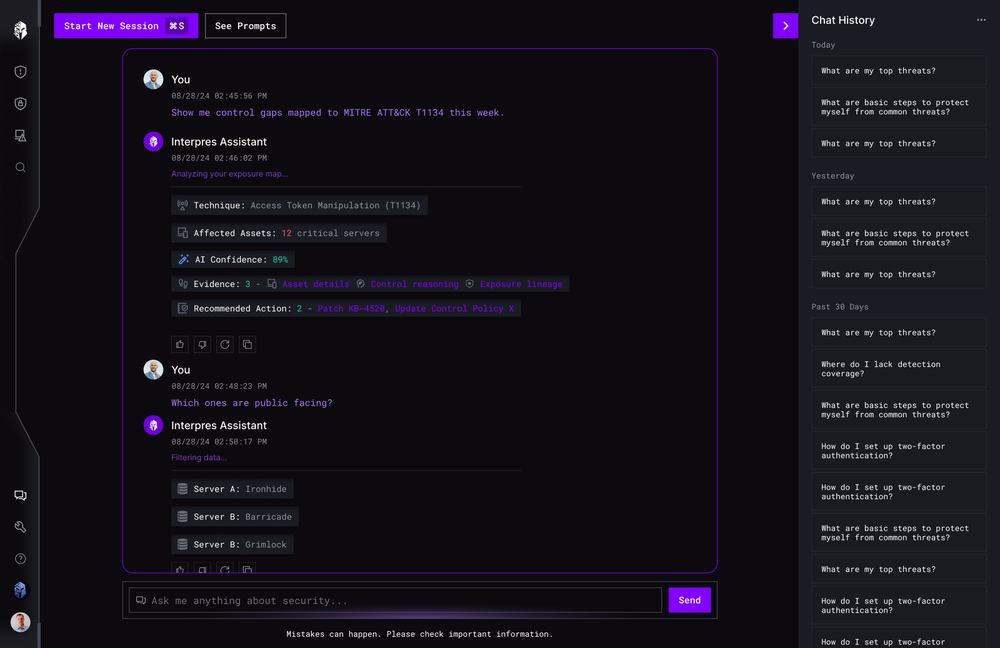
2019 to 2026Explainable AI decision support for threat & exposure management
A governed AI assistant that shows its reasoning, links its evidence, and refuses to answer when it is not sure.
How I work
How AI supports my design workflow
I use AI throughout the workflow while retaining responsibility for every design decision.
Understand
Synthesize interviews, product signals, and technical documentation.
Verify themes against the original evidence.
Explore
Generate alternatives and expose edge cases worth investigating.
Frame constraints and choose the strongest direction.
Prototype
Turn concepts into working interactions earlier in the process.
Refine flows, states, accessibility, and system behavior.
Validate
Draft research plans and surface recurring usability patterns.
Conduct research and decide what the evidence supports.
Communicate
Clarify rationale, specifications, and stakeholder narratives.
Own the recommendation and explain the tradeoffs.
The same AI answer, with and without the patterns that make it trustworthy.
Switch each pattern on and watch what an analyst can actually check. These are the four patterns I designed into the Interpres decision support experience.
Prioritize the three internet-facing hosts running the unpatched VPN gateway.
High: sources agree and the scan data is recent.
One host has no scan data from the last 30 days. Verify it before patching.
Illustrative example. Not live data.
If you're building something complex and consequential, I'd welcome the conversation.
Focused on Senior, Staff, or Principal Product Designer roles on ambitious, systems-level products.
Résumé available on request, tailored to the role.